
The world is a dark place. That’s why Lola Mayeras‘ creations are brightly colored and full of humor, otherwise we would all slowly despair. The French designer has mastered the balancing act between art object and everyday object and creates ceramic pieces that can be displayed and admired, but also used when needed. In this interview, she tells us how colorful her home is, why the best feedback on her work comes from a plastic surgeon and what a cemetery full of unfinished concepts is all about.
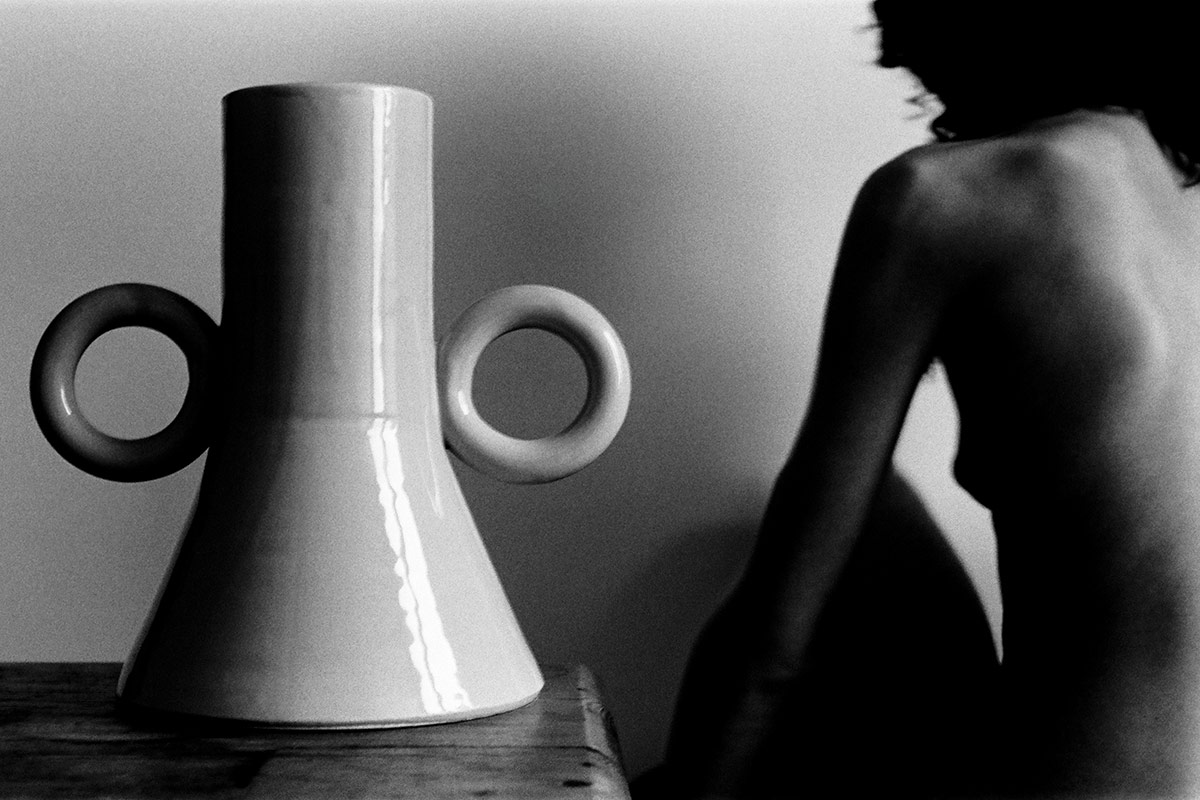
FACES: You used to design fashion. How did you get from fashion to ceramics?
Lola Mayeras: I grew up with clay: my father is a ceramist and his studio was connected to the house where I grew up. I always knew that I wanted to design things. After school, I went straight into fashion and was very happy as a fashion designer for a few years. But when it came to creating something of my own, I had no desire to do it with clothes. I just couldn’t imagine starting a fashion brand. Designing objects came during the first Covid-19 lockdown, when I rediscovered my father’s workshop in the south of France.
Q: Characteristic colors of your designs include blue, yellow and pastel pink. Were you drawn to different color palettes during your time in the fashion industry than you are today?
LM: In the fashion industry, I was more interested in patterns, silhouettes and shapes. For each season and collection, we changed the colors early in the design process. Today, the colors usually come at the end, first there is the design process and the shape concept.
Q: Do you recognize parallels between the creation of a ceramic piece and your approach to designing fashion in the past?
LM: Definitely, because I still think in volumes and sketch a lot. Most pieces are initially created as quick drawings. Whether it’s a piece of clothing or a lamp, it doesn’t matter, because it’s all about the silhouette and how it presents itself in the room. There is always a small concept behind it. Fashion has also taught me how to build a story across a collection, even if it’s subtle or ironic. I still think in series, as if the pieces belong together.
Q: Would you return to the fashion industry?
LM: Maybe for a very specific project, a collaboration or a guest collection, but not full-time. I’m not nostalgic about fashion, but I still love textiles, textures and dressing objects or people.
Q: Your designs are playful, colorful and fun. And yet they are everyday objects. Where do you find inspiration?
LM: It usually starts with a reference to something I’ve seen, misread or overheard that triggers an idea. I often start by drawing existing objects and then distort or twist them. A lot of it also comes from my memory, almost like caricatures of my everyday life as a child.
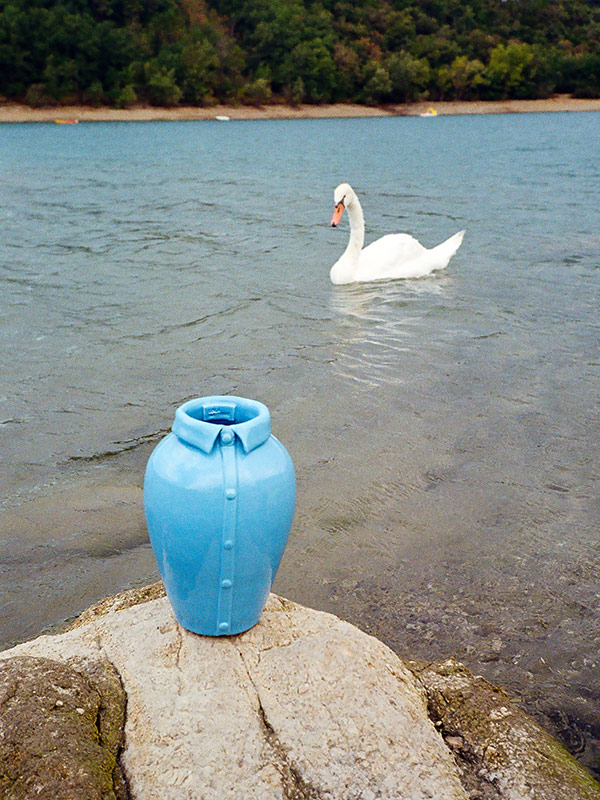
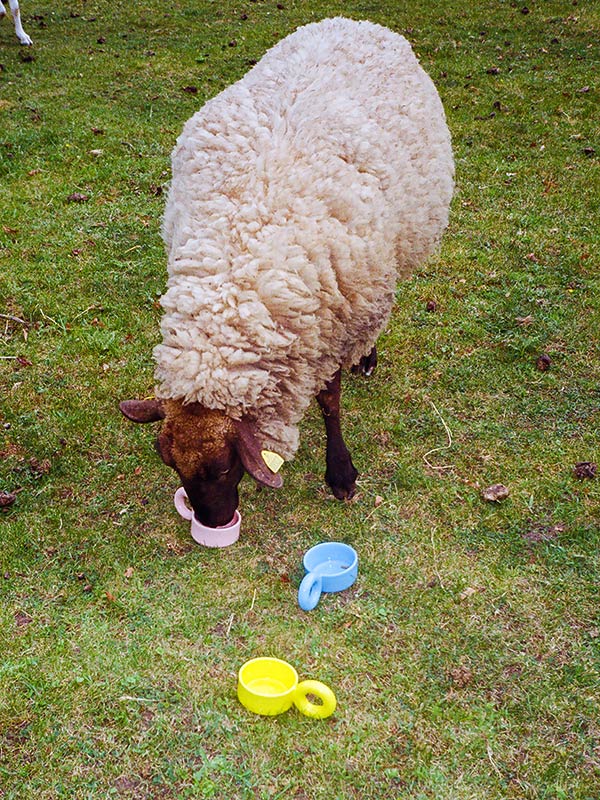
„I grew up in the south of France, so sun-faded colors, the sluggishness of the heat and the dolce vita aesthetic have left their mark on me.“
Q: How do you want people to feel when they look at your creations?
LM: A mixture of recognition and confusion. Like something familiar, yet strange enough to make you smile.
Q: How do your place of origin and your current place of residence influence your design process?
LM: I grew up in the south of France, so sun-faded colors, the inertia of the heat and the dolce vita aesthetic have left their mark on me. That stays with you. Now I live in a tiny Parisian apartment with someone who is also a creative. It makes me think a lot about scale, humor and what’s really important when space is limited.
Q: Is there a source of inspiration for your ceramics that has absolutely nothing to do with ceramics?
LM: The street photography of my friend Bram van Dijk.
Q: How long does it take from the idea to the finished object?
LM: Anything between a week and twelve months is possible, depending on the size and how experimental I want to be. Clay is slow, he doesn’t care about your deadlines. For the bedding set, it took me more than a year to develop the design properly, find the right factory and have it made into a finished product.
Q: Do you follow trends and social media closely or does it tend to interfere with your creative process?
LM: I try not to do that as much as possible. I post, then I disappear. But of course I still get caught in the scroll trap sometimes. I think I’m more influenced by the trends that were around when I was a kid than by what’s current.
Q: Was there a specific moment when you realized that you wanted to pursue a creative career?
LM: I never wanted to do anything else. I always knew that I wanted to do a job where I could let my imagination run wild. I started my first „brand“ when I was eight years old: My father allowed me to make a small collection of rather ugly ceramic figurines, which I displayed for fun in his souvenir store on the road to Saint-Tropez. I didn’t sell anything, but I was very proud to see my figurines there.
Q: Browsing through the Lola Mayera range, one imagines that your home must be full of color and whimsical objects. Is that true or is your personal interior design style completely different from what you design?
LM: There are definitely colors, but I try to keep them to a minimum. I have a lot of colorful prototypes lying around, but I also love that my apartment has white walls, wooden furniture and plain white plates in the kitchen. Color is nice, but too much of it would probably drive me crazy.
Q: What is the most surprising decorative element you have in your home?
LM: I have some paintings by Jesse Fisher, they are the splashes of color on the white walls.
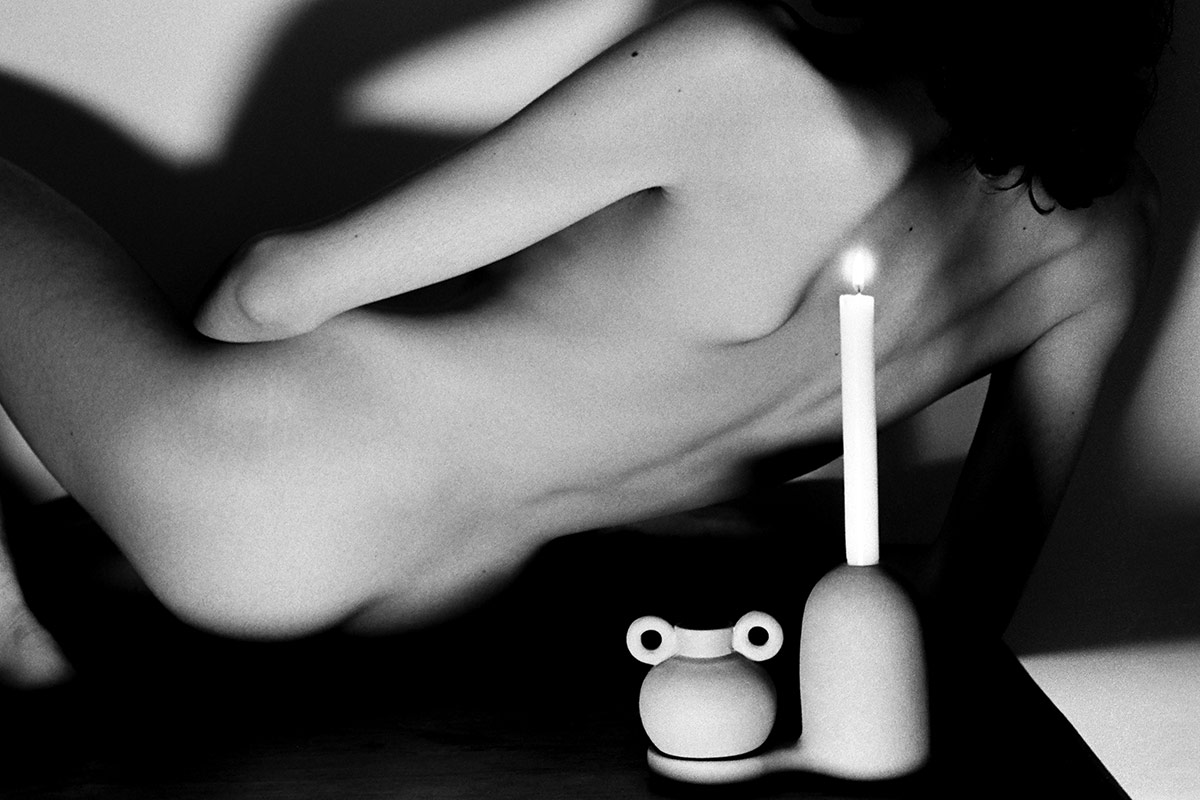
„The idea is to create a complete living universe.“
Q: Do you have a favorite object from your collections?
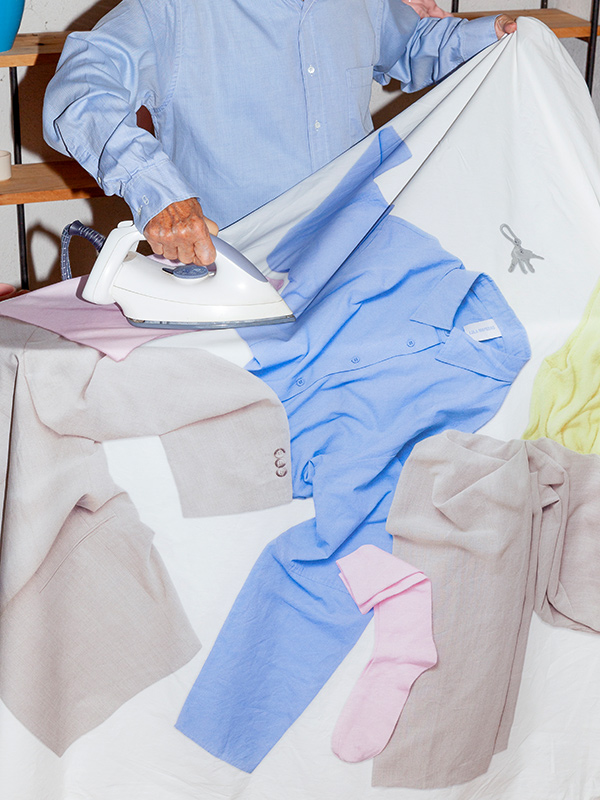
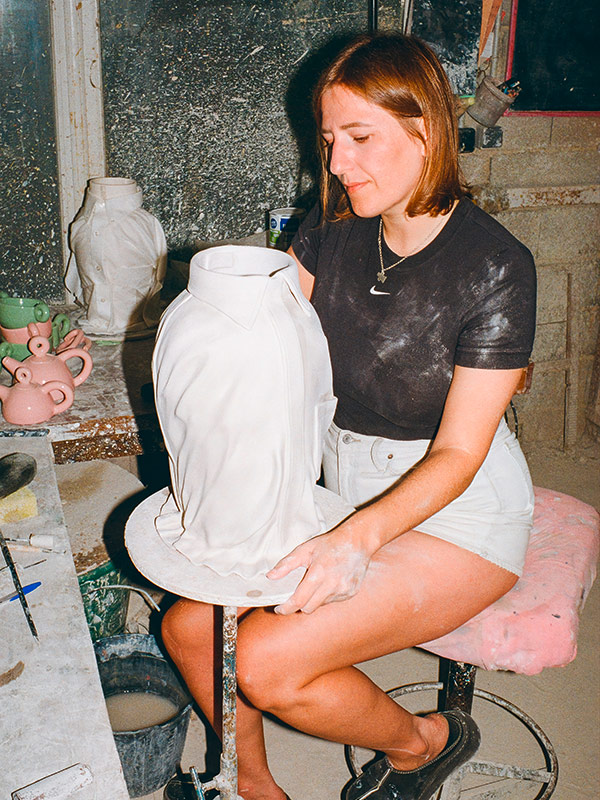
LM: „The Shirt Stack“ – for me it is the piece that opened a new door to sculptural collectibles.
Q: When you recently launched a bedding set, you returned to textiles. What other materials would you like to experiment with in the future?
LM: I have already developed pieces in wood and stainless steel and would like to continue exploring new materials. The idea is to create a complete living universe, a complete collection that fits together. As for the next material, I have some ideas that could work very well for glass. So that would be exciting to explore.
Q: What’s the best or funniest feedback you’ve ever received about your art?
LM: During Paris Design Week, a plastic surgeon came into my showroom, grabbed the „Glovy Mirror“ – the sculpture of a hand in a glove holding up a mirror – and said: „This is the perfect mirror for my clients after they’ve had their Botox“.
Q: How can we make the world even more colorful and entertaining, apart from fun decorative items?
LM: I find the average car color so boring, they are all black, dark blue or white, there is definitely room for colorful improvement.
Q: If you could only save three of your designs and the rest were lost forever, which ones would you grab?
LM: The bedding set, one of my large loop cups and the shirt stack.
Q: What has your creative career taught you about other areas of life?
LM: That nothing is linear. Most things don’t work the first time, and that’s perfectly fine.
Q: Have you ever created something and then found it so terrible that you immediately destroyed it again?
LM: Behind my workplace is a secret graveyard full of tragically unfinished concepts.
Q: What do you have to look out for if you want to start with ceramics as a hobby? Is it really as difficult as it looks?
LM: You will break things, glaze things badly and learn to really love a piece only when it comes out of the oven.
Q: Have you ever seen a ceramic piece and thought „I wish I’d had that idea!“?
LM: Not really. Of course there are things that I really like, but overall I’m not that obsessed with other ceramic pieces.
Q: You have plates, cups, lamps, vases – what objects will come next?
LM: I have just exhibited my latest work during Paris Design Week: A sculpture made of wood and ceramic that can be used as a coffee table. Apart from the classic household objects, I am more and more interested in creating unique sculptures that are still usable in some way. Hopefully the next object will also consist of this.
„I always knew that I wanted to do a job where I could let my imagination run wild.“
Q: What is more important and why – form or function? Or both equally?
LM: Form. Always the form. But functionality should follow.
Q: Imagine you get to design something for a celebrity. Who is the lucky one?
LM: Jean Paul Gaultier, because he has always managed to make the bizarre desirable. I imagine an object that oscillates between provocation and tenderness, like a wink to his universe.
Q: Take us through a typical working day.
LM: I don’t have a specific routine, which can sometimes be a problem. My daily routine depends on whether I’m in my apartment in Paris or in my studio in the south. Some days I’m in production and spend the whole day in my studio working on new pieces or finishing a commission, other days I’m drawing ideas, packing and shipping orders or planning the next photo shoot or exhibition. Whatever the day looks like, it always starts with a coffee.
Q: Do you ever lack inspiration? If so, what do you do to get new ideas?
LM: That rarely happens. I have a little notebook full of sketches and ideas, and I hardly have time to try them all out. When I feel stuck, I open it up and rummage through my old thoughts. There’s always something I can revive or turn into something fresh.
Q: Where do you see Lola Mayeras as a brand in the next few years?
LM: In more apartments, in galleries, in collaboration with stores, architects or fashion brands. I want to continue to expand my world with new materials and unexpected projects.
Q: If you weren’t designing, what would you be doing?
LM: I recently visited a bouncy castle factory and was thrilled – so I would probably be the owner of a bouncy castle factory.
LOLA MAYERAS
Lola Mayeras is all about color. The Frenchwoman actually started out as a fashion designer. Today, she prefers to design cups, vases and all kinds of everyday objects that lie somewhere on the spectrum between art and utility. Thanks to her love of experimentation and her never-ending source of inspiration, we can be sure that new objects will be appearing in the Lola Mayeras universe all the time. lolamayeras.com
You can find serotonin for your own four walls here.
Photos: Bram van Dijk, François Pragnère
Kathrin Schaden from the Ursula Futura design studio also has a soft spot for playful colors and shapes.
